Showing posts with label i2b2 Community. Show all posts

Tuesday, June 23, 2015

i2b2 AUG Annual Meeting

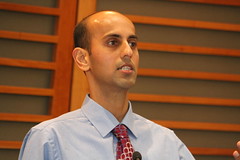
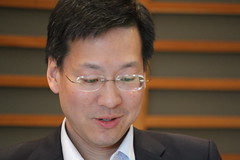
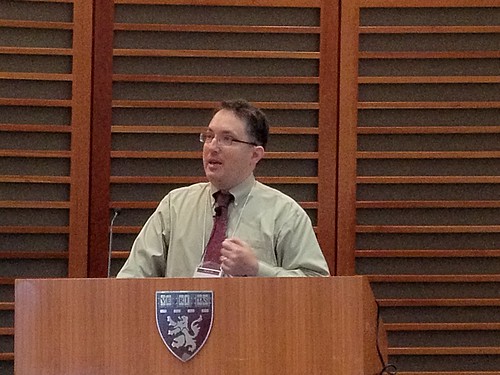
Impressive opening session where we heard from a large set of users of i2b2 including (forgive me for selective memory and the Boston folks explicitly excluded):

  • at UNC/South Carolina and regionally
  • lots of work on biobanking
  • ACT network across CTSAs
  • Cancer Centers (e.g. the Kimmel Cancer Center)
  • University of Alabama (part of SHRINE) and Cimino
  • Deborah Batson from Colorado ensuring that good stuff is available to local researchers.
  • Microbiome data integrated with i2b2 in Germany. R Script.
  • October 9th- European i2b2 AUG meeting in Leicester, UK
  • TriNetX engaged in several productive contracts.
  • San Antonio (part of a PCORI) working on closing the gap between biostatistics and 
  • UC Davis, UCSF part of a large 
  • Autoimmune Foundation aligning multiple small groups.
  • Dan Baker at EPIC gave a lot of encouragement about collaboration and integration with i2b2
  • Adding statistical capabilities to the web client
  • Genomic full sequence integration with EHR
  • University of Florida (70+ papers published using i2b2)
  • Russ W. from Kansas spoke about a wide range of applications and Cerner integration.

Doug MacFadden gave an update on i2b2 SHRINE.

Nich demonstrated real-time 21-site (yes, twenty-one clinical sites) responding to queries. He also demonstrated vetting recruited patients through a new set of i2b2 plugins.

Ken talked about involving patients and recruiting patients with SMART apps.
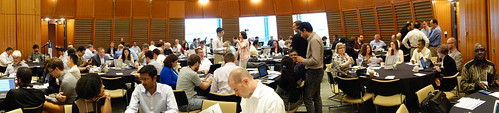
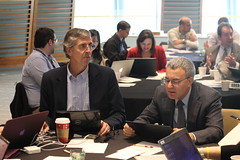
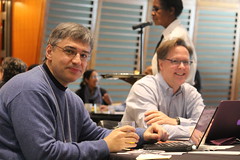
Getting ready for the meeting


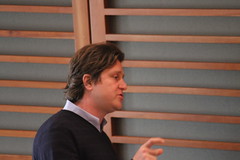
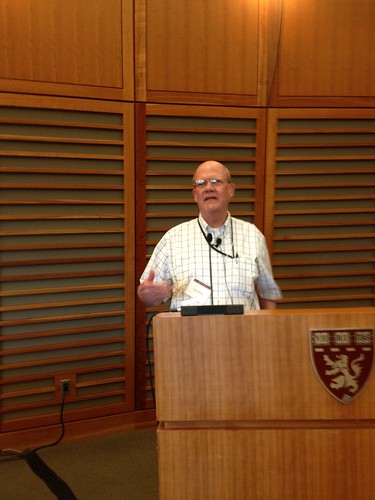
Shawn Murphy kicks off i2b2 AUG meeting

Monday, June 9, 2014

Cardiovascular Research Grid

I just learned of an interesting research effort and toolkit called the Cardiovascular Research Grid. It’s quite extensive in the data types it supports and includes i2b2 for integration with clinical data and the Globus toolkit for funneling genomic data to the Galaxy genomics analytic platform. Many other tools for imaging data and its analysis as well. Quite impressive.

Saturday, February 1, 2014

i2b2 evaluation

John Bickel shared an interesting paper in which he and his colleagues investigated the use of i2b2 for cohort identification.

Friday, June 21, 2013

All Hands Meeting—Network Medicine

Dr. Ed Silverman, Professor of Medicine and Chief of the Channing Division of Network Medicine gave a broad and fascinating tour of respiratory physiology and the underlying population genetics.
UntitledUntitledUntitled

Friday, May 17, 2013

Profiles—A Tool to Study Researcher Communities

Griffin Weber described the Profiles open source tool that is now being used world wide that was first developed for our work in Harvard Catalyst. It is used to find collaborators, create teams for research projects, study promotion and the processes of academia.
Untitled

Friday, May 10, 2013

Governance models for distributed queries across heterogeneous healthcare institutions

Murphy, Bickel, Kohane, Simons, Churchill, Mendis. Wattanasin, Weber, Donahoe, MacFadden

Discussed the interaction between different governance models and how they interact with the architecture.

Friday, March 15, 2013

All Hands Meeting Ps

10:14 AM, Mar 15, 2013

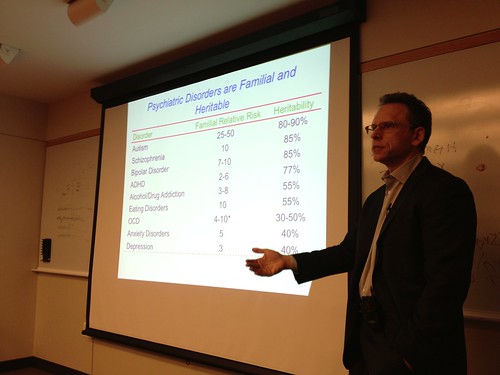
Jordan Smoller, co-PI of the MDD-SSRI-resistance i2b2 DBP presented today the paper he contributed to that made a lot of headlines regarding genomic variants shared across 5 psychiatric disorders.

Untitled

Sunday, December 9, 2012

Outcomes in dental medicine and i2b2

From our colleagues at UT Houston and the Harvard School of Dental Medicine, we just heard about a couple of interesting projects that leverage i2b2 for dental medicine. The most recent is one that studies patient safety in dentistry. Also i2b2 has been used to create a multi-institutional dental study. Hats off to Dr. Walji and colleagues.

Monday, December 3, 2012

New i2b2 plugins from U. Mass

The family relationship analysis tools seem particularly interesting.

See http://micard.umassmed.edu/software.html

Tuesday, November 20, 2012

i2b2 Annual Retreat with External Advisory Board

We met with our external advisory board that includes Dan Masys, Eric Perasklis, Lisa A. Cannon-Albright, Peter Tarczy-Hornoch, Valerie Florance and George Hripcsak.

Isaac Kohane reviewed i2b2 impact and questions for the EAB.

Kat Liao presented the RA DBP and the genetic risk score and it's nice superimposition on larger, more expensive, longer studies. She also described NLP algorithm portability (to NorthWestern U. and Vanderbilt). She also described interesting interactions between lipid levels, lipid-informing genotypes, RA risk genotypes and heart disease.

Ashwin N. Ananthakrishnan described the early work on the IBD DBP that is already accumulating samples and some intriguing early findings regarding vitamin D.

Zongqi Xia described the multiple sclerosis DBP which brings together EMR textual contents (through NLP), volumetric analyses (from clinical imaging of the CNS) and clinical outcomes.

Stan Shaw provided an overview of the challenge of characterizing and stratifying type 2 diabetes mellitus genetically and phenotypically. He also demonstrated how many of the biomarkers we are used to studying for cardiovascular risk are typically not studied longitudinally in patients akin to the virtual cohort

Tianxi Cai painted the road ahead. She articulated two questions of interest: who are the likely treatment responders and who are members of high risk populations? By way of example, she described investigations she has performed with conventional cohort studies (as a prelude to EHR studies) to define what is the incremental value of a biomarker (e.g. CRP). She demonstrated how subgroup analyses are clarifying with regard to highlighting the actual contribution of any specified biomarker to clinical decision-making.

Mark Natter spoke of the huge national investment in registries and the very large tail of ongoing investment on pre-existing registries. He also summarized the problem with existing registries. He summarized the CARRAnet i2b2 registry experience with over 8000 pediatric rheumatology patients (20K total) with 31,000 detailed visit records so far. Each investigator has full access to their own data and aggregate views across the entire registry's network.

Shawn Murphy gave a broad technical update on i2b2 and a glimpse of the future roadmap. This included the clinical trials capabilities, augmentation with SMART apps, episode of care analyses, and additional new modules.

The EAB then went into executive session.

i2b2 EAB Meeting 2012i2b2 EAB Meeting 2012i2b2 EAB Meeting 2012i2b2 EAB Meeting 2012i2b2 EAB Meeting 2012i2b2 EAB Meeting 2012i2b2 EAB Meeting 2012i2b2 EAB Meeting 2012

i2b2 EAB Meeting 2012i2b2 EAB Meeting 2012

i2b2 EAB Meeting 2012i2b2 EAB Meeting 2012

i2b2 EAB Meeting 2012i2b2 EAB Meeting 2012

i2b2 EAB Meeting 2012i2b2 EAB Meeting 2012

i2b2 EAB Meeting 2012i2b2 EAB Meeting 2012

i2b2 EAB Meeting 2012i2b2 EAB Meeting 2012

Friday, October 19, 2012

All Hands Meeting: Bette Phimister.

Bette Phimister, Deputy Editor of NEJM discussed the challenges of being an editor of the New England Journal of Medicine and what the process towards publication looks like. The most vivid challenge described was that of assigning causality at the clinical level to variants discovered in genome-scale studies.

Untitled

Sunday, September 23, 2012

Roy Perlis: All Hands Meeting on Major Depression and Treatment Resistance (genetic basis)

Why study genetics of TRD?

Heritability of TRD estimated to be ~60% (styled in the manner of Visscher.

The Challenge:

1) Lasagna's Law

2) Establishing TRD requires multiple treatment trials (costly).

During the closed i2b2 MDD TRD DBP:

a) Developed high specificity for extremes of response (specificity of 95%)

b) Studied changes in CNV burden and MDD/TRD. Results are still preliminary.

c ) Clinical Goal: Risk Stratification

d) Discussed CNV changes

nRoy Perlis

Wednesday, September 5, 2012

Summary and videos from the SHRINE Conference

Thanks to Katia and Kerry Ann Foley, we now have a site summarizing the very successful SHRINE meeting that was held this Summer at Harvard. It includes videos of all the presentations.

Friday, August 31, 2012

Write up of successful examples of research IT

For those of you in the i2b2 community, this piece in Science Translational Medicine may be obvious. I am pretty sure it's not an obvious conclusion to all (particularly some of the vendors) so you might want to read it for reference.

Wednesday, July 25, 2012

SHRINE National Meeting

Mark Overhage, formerly of the Regenstrief Institute and now of Siemens gave the keynote. He emphasized what can be done today with Big Data and how much of it can (and cannot) be extracted from observational data from healthcare. He cast the challenge of analysis in the context of accountable care. He also reviewed how the coarse grained guidelines often can run counter to the best population-evidence-based decision models.Marc Overhage, MD, PhD

Keith Marsolo described the comprehensive efforts at CCHMC to harness healthcare data to improve quality and then how he has employed the SHRINE infrastructure to allow for large inter institutional registries (particularly in Inflammatory Bowel Disease).

SHRINE Meeting

Mark Natter described the value of large registries and illustrated how to create these cost-effectively using SHRINE for the CARRAnet pediatric rheumatological disease registry.

SHRINE Meeting

David Ortiz then described the technical details of the self-scaling system that implements for the CARRAnet SHRINE.

David Ortiz

Rebecca Miksad described her provocative study of IBD, colon cancer and diabetes using SHRINE.

SHRINE National meeting

Lisa Dahm described the very impressive 11 million patient UCReX SHRINE Implementation that is currently likely the largest near-real-time clinical patient data resource.

SHRINE National meeting

John Hutton summarized what it takes for an institution like Cincinatti Childrens Hospital Medical Center to participate in the eMERGE network (along with Boston Children's Hospital) using the SHRINE mechanism as a means to provide real-time phenotyping for genomic studies.

SHRINE National meeting

Day 2 SHRINE Meeting

There was a highly productive conversation about what it will take to scale SHRINE for clinical trials nationwide. We had a longer agenda but there was so much interest in the regulatory implications, in the different network topology, different loci of control, different levels of identification, different models of user registration, different models of reduplication of patient identities.

.

Tuesday, July 24, 2012

i2b2 AUG

Attendance was as good (slightly better) than last year despite this date being in the midst of the Summer doldrums.

i2b2 AUG

I spoke about the positive disruptive effect i2b2 was having on data sharing, code sharing, clinical domain script sharing (e.g. upload from ETL), and even electronic health record functionality.

Toothless wonder

Shawn Murphy brought us up to date on temporal reasoning, text searching and other 1.7 features.

Mike Mendis reviewed new infrastructure components (Jboss 7, Bamboo etc)

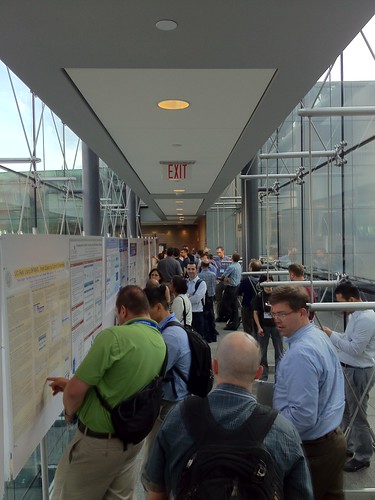
The parallel track of poster sessions was well attended.

i2b2 AUG National Meeting 2012

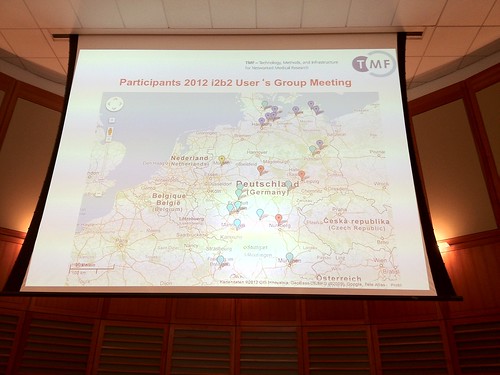
Ulrich Sax gave an impressive review of al the i2b2 activity occurring in Germany

AUG i2b3

AUG i2b3

Sebastian Mate described and then demonstrated(!) the i2b2 install wizard.

AUG i2b3

Andrew Post from Emory described the use of i2b2 for quality improvement, temporal abstraction, the creation of individual i2b2 instances in the AWS cloud, predictive modeling and the Minority Health Grid.

AUG i2b3

Michael Buck, NYC Dept of Public Health described relevant efforts in the Query Health effort. He provided interesting insights in the QDM data model fro the National Quality Forum and how it fits into the i2b2 ontology. These codes (now represented in the i2b2 ontology) will determine the operational definitions of the characteristics of phenotypes that are linked to quality outcomes (and therefore reimbursement).

AUG i2b3

Day 2:

Shawn Murphy introduced the next step of SHRINE, SHRINE-CT (CT = Clinical Trials) to enable a distributed mechanism of identifying patients meeting criteria for trials and then recruiting them. This is important because so many patients "have" a pathology and yet do not meet criteria for a trial. SHRINE-CT allows you to (with the right credentials and IRB permissions) browse across multiple patient populations to find the "right" subjects for the clinical trial. He also spoke about the SMART EMR view and other mechanisms for community contributions.

Nich Wattanasin gave us the details on his work on making SMART work atop of i2b2 and the workflows that this enables.

Untitled

Lori Philips

Lori Philips described the ontology mapping cell and focused on the complexity of mapping one large terminology to another (e.g. ICD9 <-> ICD10).

Untitled

Brian Wilson from Tufts University described the GARLIC genomic integration cell that includes annotation, search (by variant ontology) and display.

Friday, June 29, 2012

Reproducibility of i2b2 NLP selection of RA patients across multiple academic health centers

A very nice result of i2b2, Vanderbilt and Northwestern teams with remarkable reproducibility (much better than I have seen for inter-expert variability in other studies) of the automated natural language processing-driven selection of patients with Rheumatoid Arthritis.

Tuesday, June 26, 2012

i2b2-based Registry for Juvenile Rheumatoid Arthritis

This article: http://jamia.bmj.com/content/early/2012/06/24/amiajnl-2012-001042.full.pdf+html describes what appears to be the largest U.S. registry for pediatric rheumatoid arthritides. It uses a multi-site SHRINE query system atop dozens of i2b2 instances representing most large sites in this country.

Friday, June 15, 2012

Pharmacoepidemiology

Dan Solomon gave a very comprehensive overview of the art and science of pharmaco-epidemiology in our monthly all-hands meeting. Special emphasis on the particular problems of using EHR data.

Untitled